
I speak to many MacBook owners who first take their faulty device to Apple, understandably expecting support through their warranty or AppleCare+ if they’ve paid for it. Too often, they leave disappointed — and, in my view, often cheated.
Under UK law, consumers have rights beyond any manufacturer warranty. The Consumer Rights Act 2015 protects customers when a product is faulty, regardless of AppleCare+, and those rights cannot simply be dismissed.
AppleCare+ is frequently presented as comprehensive cover, but in practice it is very limited. While it claims to protect against accidental damage, liquid damage is only covered in narrowly defined situations, and AppleCare+ explicitly does not cover failure due to defects in the device itself.
Naturally, having repaired over 1400 MacBooks and iMacs, I only meet customers who Apple has refused to help, so I can’t claim to represent every MacBook owner’s experience. I have never seen a liquid damaged iMac but the most frequent MacBook repair is liquid damage requiring microelectronic repair [I rarely need to replace a logic board], followed closely by screen and battery replacements.
What I can speak about with certainty is what I see repeatedly when Apple declines a claim and presents the customer with an unexpectedly high repair quote because of their heavy handed ‘replace everything’ approach to repair. Ofcourse, Apple know that a high repair quote will frequently tempt the unweary to abandon their previous investment and purchase new – why do you think Apple insist on your presence in the showroom for repair claims?
If you succumb to retail therapy and replace your faulty MacBook here’s what just happened. Apple just made a second lot of profit from you and you just retired a MacBook that could have been repaired for 1/4 to 1/2 of Apple’s quote. If you let them recycle the faulty one for £0 they remove it from the market [aka crushing] when much of it could have been reused. Nobody wins except Apple. Apple admit the manufacture of a single MacBook produces 300+ kg of greenhouse gases.
MacBooks can fail for many reasons: impact, liquid ingress, heat, vibration or simple component failure. However, the most common reason Apple gives for refusal is liquid damage — often to the complete surprise of the owner.
In reality, almost any MacBook that’s been used for a few years will show some evidence of liquid exposure. Most of the time this is harmless: a tiny amount of moisture that caused slight corrosion but evaporated long before it could cause any real damage.
Many customers tell me their claim was rejected due to liquid damage. When I open the machine, I frequently find nothing more than a faint tide mark — sometimes from a single drop — with no indication that liquid ever reached the electronics.
From an engineering perspective, liquid cannot damage a MacBook unless it actually contacts powered circuitry. Without that, no electrical damage can occur. I could take a MacBook swimming if I had removed the battery first. I would flush it with distilled water and bake it dry but it would work afterwards.
In these cases, the MacBook has almost certainly failed for another reason: a weak component, thermal stress or a design-related issue. Yet the presence of a trivial liquid mark allows responsibility to be shifted onto the customer.
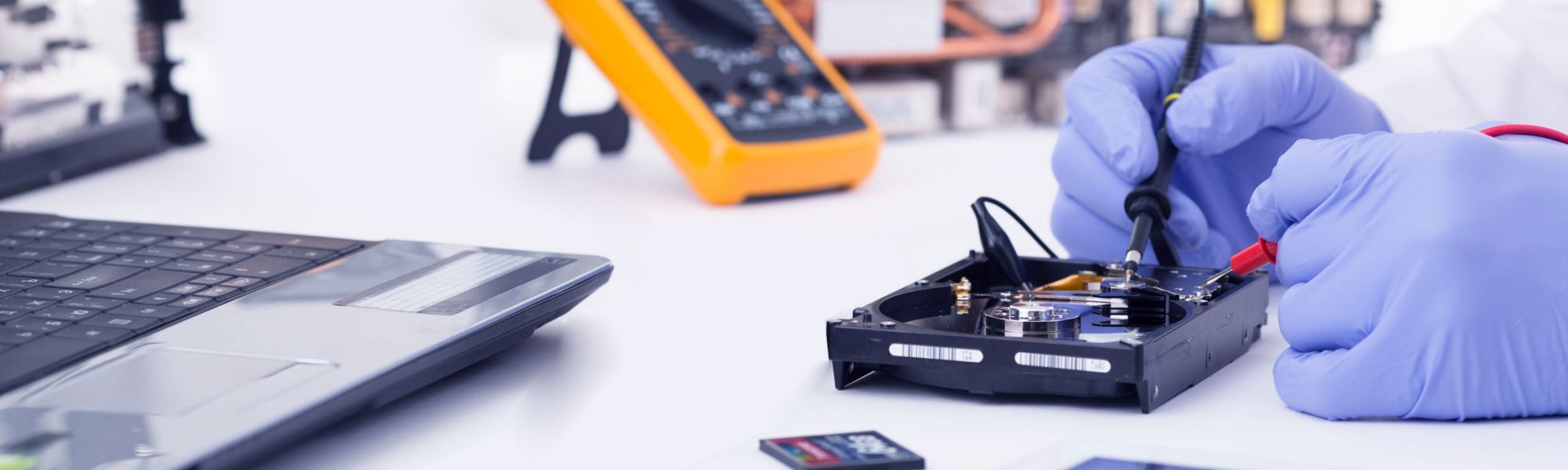
This is where independent, board-level repair matters. I assess what actually failed, not what is most convenient to blame. My goal is to repair the fault, not to deny responsibility — and to save customers from unnecessary replacements and inflated costs.